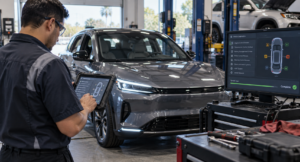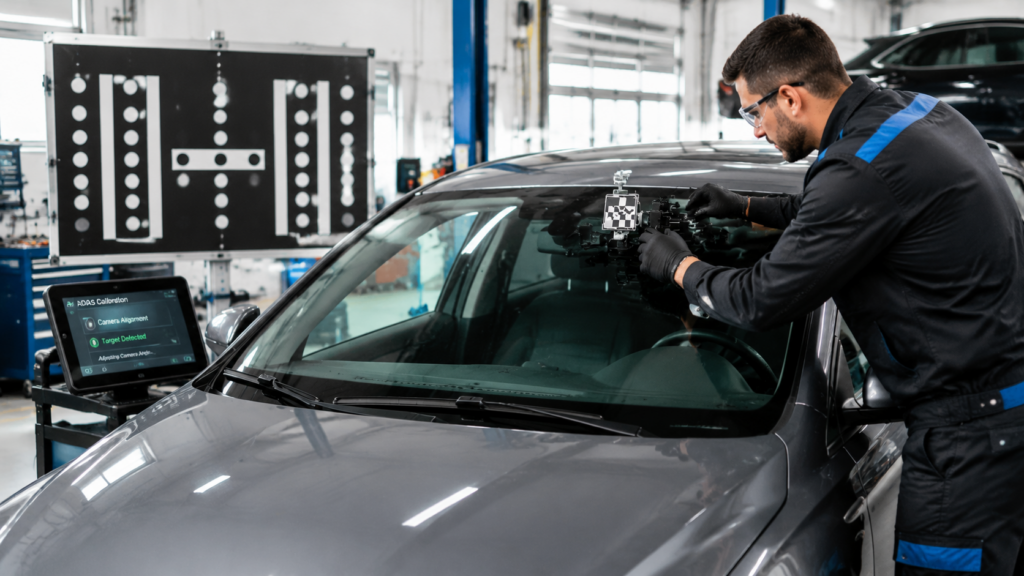
Modern vehicles are no longer just mechanical machines—they are advanced computer systems on wheels. One of the most important innovations in recent years is ADAS (Advanced Driver Assistance Systems), which includes lane departure warning, adaptive cruise control, emergency braking, and parking assist features.
However, many drivers do not realize that these systems rely on precise sensor alignment. Even small repairs like windshield replacement, tire changes, wheel alignment, or suspension work can affect ADAS accuracy. That is why professional calibration is now an essential part of modern auto repair.
What Is ADAS Calibration?
ADAS calibration is the process of adjusting and resetting a vehicle’s cameras, radar sensors, and LiDAR systems so they function correctly after a repair or adjustment.
These systems rely on precise angles and positioning. Even a few millimeters of misalignment can cause inaccurate readings, increasing the risk of accidents or system failure.
According to the National Highway Traffic Safety Administration, driver assistance systems must be properly maintained to ensure road safety and reliability.
Why Windshield Replacement Requires Calibration
Most modern vehicles have a forward-facing camera mounted behind the windshield. This camera is responsible for lane detection, collision warnings, and traffic sign recognition.
When the windshield is replaced, even if installed perfectly, the camera angle is disturbed. Without recalibration, your ADAS system may misread road conditions or fail to detect obstacles correctly.
Wheel Alignment and Suspension Repairs Affect ADAS
Wheel alignment and suspension systems directly impact how your vehicle sensors interpret road positioning. If your wheels are misaligned, ADAS features like lane assist may trigger incorrectly or fail altogether.
Suspension changes can also shift vehicle height and sensor angles, affecting radar and camera accuracy.
This is why technicians often perform ADAS recalibration immediately after alignment or suspension work.
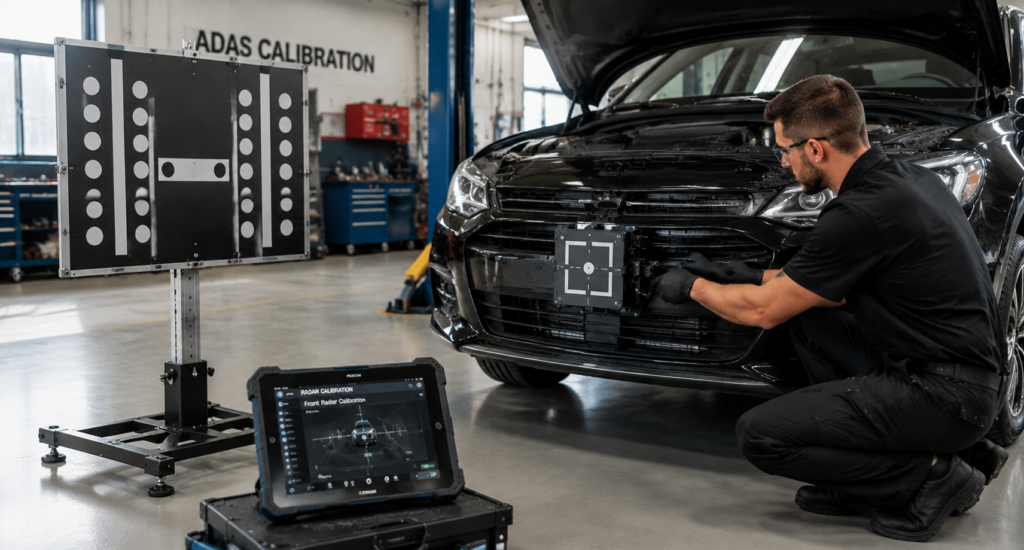
Radar and Front Bumper Sensor Calibration
Many ADAS systems use radar sensors located in the front bumper or grille area. These sensors control adaptive cruise control, emergency braking, and forward collision warnings.
If the bumper is removed or replaced—even after a minor accident—the radar must be recalibrated to ensure it is detecting distance and speed correctly.
Failure to recalibrate can result in delayed braking response or false alerts.
Signs Your ADAS System May Be Misaligned
Drivers should watch for warning signs that indicate ADAS calibration may be needed:
- Lane departure warning activating incorrectly
- Adaptive cruise control not maintaining distance properly
- Collision warning alerts appearing too frequently or not at all
- Steering assist behaving inconsistently
- Dashboard warning lights related to driver assistance systems
If any of these symptoms occur after a repair, immediate inspection is recommended.
Why ADAS Calibration Is Not Optional
Some drivers assume that ADAS systems will automatically adjust after repairs, but this is not always true. Many systems require precise manual calibration using manufacturer-approved tools and diagnostic software.
Without calibration, the safety systems you rely on may not function correctly in critical situations.
The Society of Automotive Engineers (SAE) emphasizes strict calibration procedures for maintaining vehicle safety standards.
Static vs Dynamic Calibration
There are two main types of ADAS calibration:
Static Calibration
This is performed in a controlled workshop environment using targets, lasers, and diagnostic tools while the vehicle remains stationary.
Dynamic Calibration
This requires driving the vehicle under specific conditions so sensors can self-adjust based on real-world road data.
Many vehicles require a combination of both methods for full system accuracy.
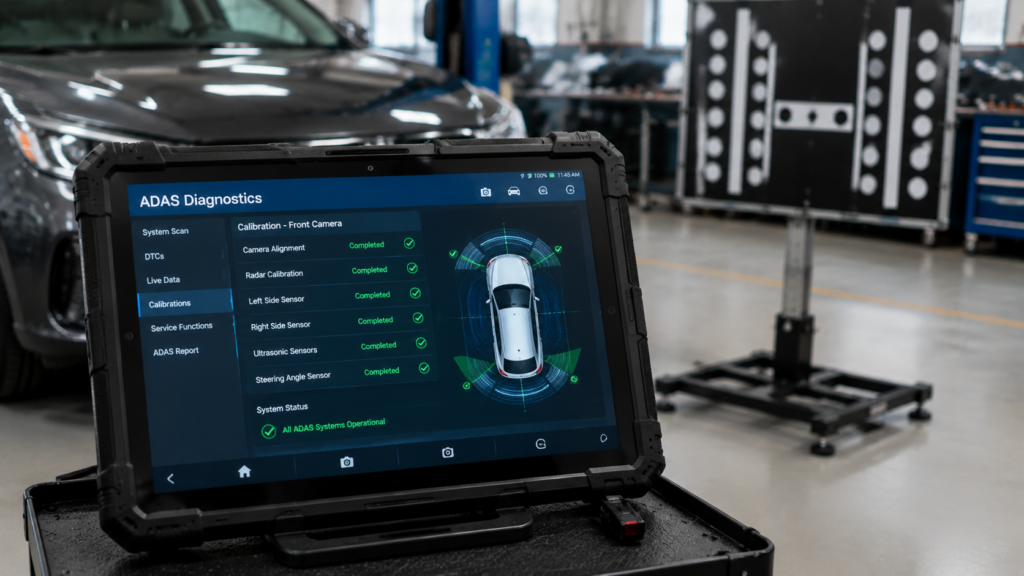
Why Professional Calibration Matters
ADAS systems are extremely sensitive and require trained technicians with specialized equipment. Attempting to skip calibration or using incorrect tools may lead to unsafe driving conditions.
At Guarantee Automotive, technicians use advanced diagnostic systems to ensure every sensor is properly aligned and tested after repairs.
When You Should Request ADAS Calibration
You should always request ADAS calibration after:
- Windshield replacement
- Wheel alignment or suspension repair
- Front bumper repair or replacement
- Accident or collision repair
- Camera or sensor replacement
Final Thoughts
As vehicles become more advanced, safety systems like ADAS play a critical role in preventing accidents and improving driving confidence. However, these systems are only effective when properly calibrated.
Whether you’ve had windshield work, suspension repairs, or even minor bodywork, ADAS calibration ensures your vehicle’s safety features function as intended.
For professional diagnostics and calibration services, visit Guarantee Automotive and keep your vehicle safe and road-ready.