Electric vehicles (EVs) are built for efficiency, innovation, and a cleaner way to drive. However, even advanced electric vehicles can be affected by extreme weather conditions. During the summer months, high temperatures can influence battery performance, driving range, charging speed, and long-term battery health.
Understanding how heat affects an EV battery can help you make smarter decisions about charging, parking, and everyday driving. With the right habits and regular maintenance, you can reduce unnecessary heat-related stress and help your electric vehicle perform reliably throughout the summer.
Why Heat Is Hard on EV Batteries
Most modern electric vehicles use lithium-ion battery technology. These batteries are designed to operate within a specific temperature range, and manufacturers equip EVs with thermal management systems to help control battery temperature.
When temperatures become extremely high, the battery management and cooling systems may have to work harder to maintain an appropriate operating temperature. That additional energy demand can affect efficiency and may temporarily reduce the amount of energy available for driving.
High temperatures can also accelerate chemical reactions within lithium-ion battery cells. Repeated exposure to excessive heat may contribute to battery degradation over time, making temperature management an important part of long-term EV ownership.
The U.S. Department of Energy provides additional information about electric vehicles, energy use, and factors that influence EV performance.
How Extreme Heat Can Reduce Driving Range
One of the most noticeable effects of hot weather is reduced driving range. When temperatures rise, an EV may use additional energy to cool the battery and passenger compartment.
Air conditioning can also consume significant electrical energy, particularly when a vehicle has been sitting in direct sunlight and the cabin temperature is extremely high. Highway speeds, aggressive acceleration, heavy loads, and repeated use of climate control can further increase energy consumption.
A temporary reduction in range during extremely hot conditions does not necessarily mean the battery is damaged. However, if you consistently experience substantial range loss or other unusual battery behavior, a professional inspection can help determine whether an underlying problem exists.
Signs Heat May Be Affecting Your EV
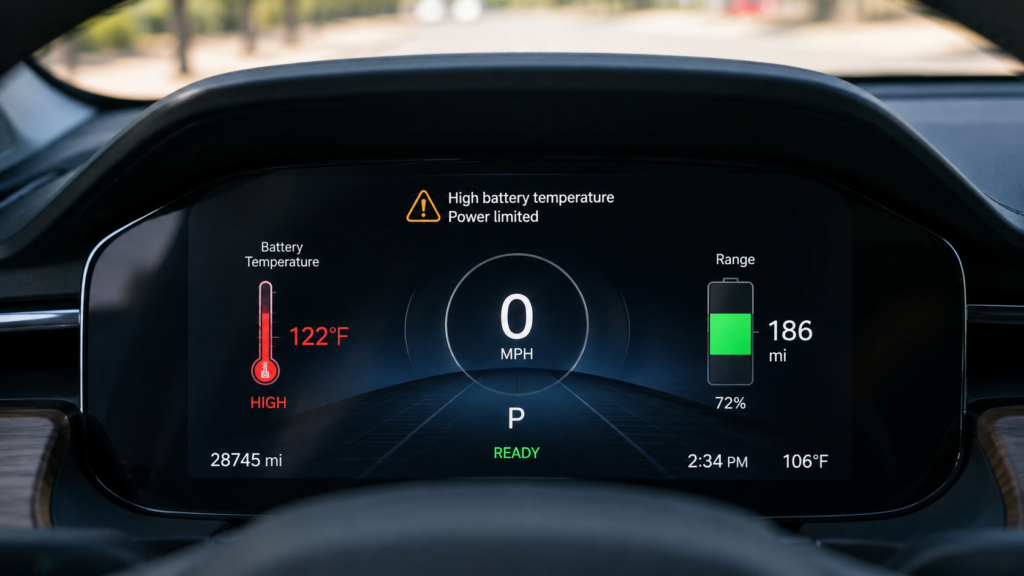
Your electric vehicle may provide warnings when battery temperatures become unusually high. Depending on the vehicle and manufacturer, you may notice changes in performance or charging behavior.
- Faster-than-usual battery drain
- Reduced driving range
- Slower charging speeds
- Battery temperature warnings
- Reduced vehicle performance
- Cabin cooling that takes longer than usual
- Warnings related to battery or thermal management systems
If a temperature warning appears repeatedly, consult your vehicle’s owner’s manual and have the vehicle inspected if the manufacturer recommends professional service.
Tips to Protect Your EV Battery in Summer
There are several practical steps EV owners can take to reduce unnecessary heat exposure and help maintain battery efficiency during hot weather.
1. Park in the Shade or a Garage
Direct sunlight can increase the temperature of both the passenger compartment and vehicle components. Whenever possible, park your EV inside a garage, under covered parking, or in a shaded location.
Reducing the amount of time your vehicle spends sitting in direct sunlight can make it easier to cool the cabin and may reduce the thermal load placed on the vehicle.
2. Pre-Cool the Vehicle While It Is Plugged In
Many modern EVs allow drivers to pre-condition the cabin before driving. When available, using this feature while the vehicle is connected to a charger can help cool the interior before you leave.
This approach can reduce the amount of battery energy needed to bring an extremely hot cabin down to a comfortable temperature after you begin driving.
Check your owner’s manual or manufacturer’s mobile application to determine whether your EV supports scheduled climate control or battery preconditioning.
3. Avoid Unnecessary Fast Charging in Extreme Heat
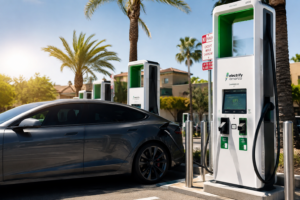
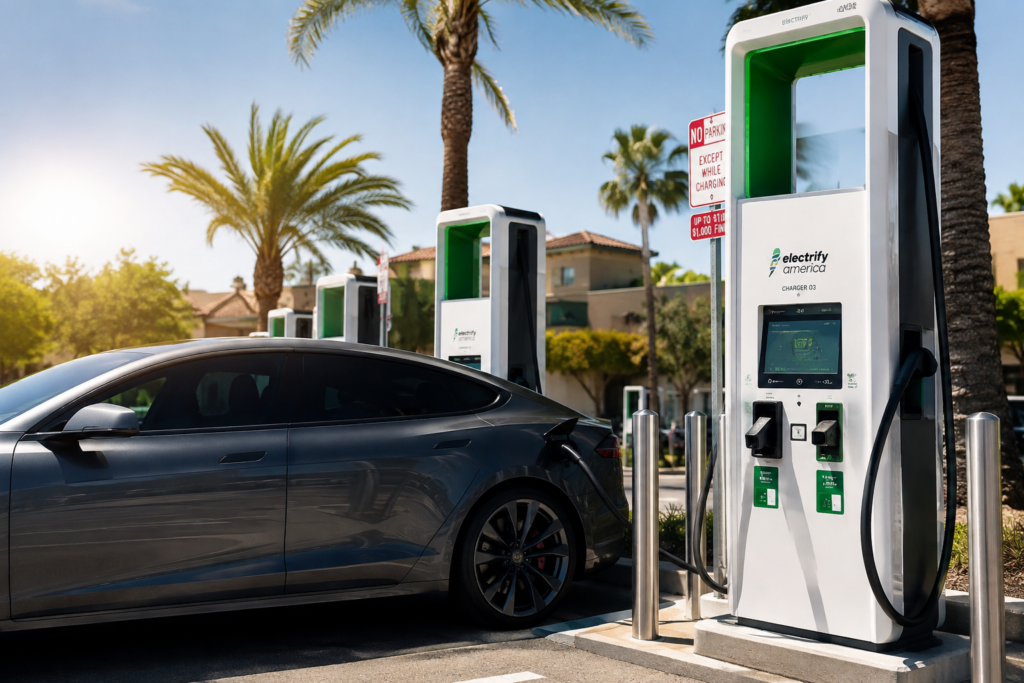
DC fast charging is extremely useful for road trips and situations where you need to add range quickly. However, fast charging can generate additional heat within the battery system.
Modern EVs are designed with thermal management systems to regulate battery temperature, but charging behavior can still influence how much heat the system needs to manage. When practical, use normal charging at home or another suitable Level 2 charging location for routine charging.
For manufacturer-specific charging recommendations, consult your owner’s manual or the U.S. Department of Energy’s electric vehicle resources.
4. Use Available Battery Care Settings
Many EVs include charging controls that allow owners to set a charging limit for everyday driving. Following the manufacturer’s recommended charging settings can help reduce unnecessary stress on the battery.
For daily driving, you may not need to charge to the vehicle’s maximum capacity every time. However, charging recommendations vary between EV models and battery chemistries, so always follow the manufacturer’s guidance rather than relying on a universal percentage.
The Role of Battery Cooling Systems
Battery thermal management is an important part of modern EV design. Depending on the vehicle, the system may use liquid cooling, air cooling, or other methods to help maintain battery temperature.
During periods of extreme heat, the cooling system may work harder than usual. A problem with the cooling system, coolant, sensors, or related components could potentially affect battery performance.
Regular professional inspections can help identify problems before they become more serious. If your vehicle displays repeated battery temperature warnings, charging problems, or unusual performance changes, consider having the vehicle professionally diagnosed.
Can Extreme Heat Permanently Damage an EV Battery?
Modern EVs are engineered with battery management and thermal control systems designed to protect the battery under different operating conditions. A short period of hot weather does not automatically mean permanent battery damage.
However, repeated exposure to excessive temperatures can contribute to battery degradation over the long term. Battery degradation is a normal part of aging, but managing temperature and following manufacturer recommendations can help support long-term battery performance.
If you notice a persistent decline in range, unusual charging behavior, repeated temperature warnings, or other changes that do not resolve under normal conditions, professional diagnostics may be appropriate.
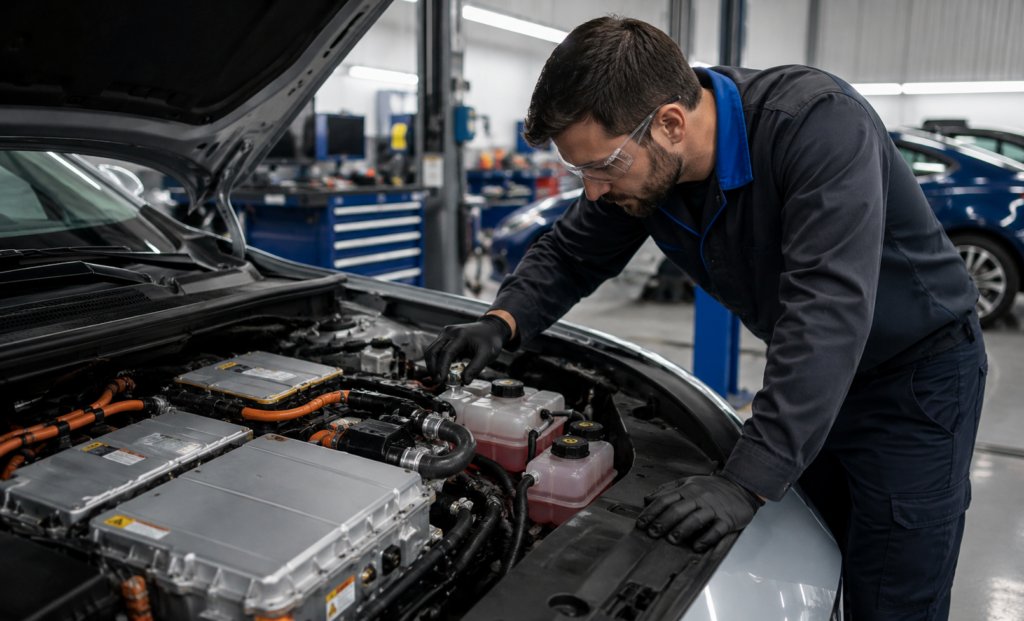
When to Have Your EV Professionally Inspected
Not every change in EV range during summer requires a repair appointment. Some range reduction is expected when temperatures are unusually high and climate control is used heavily.
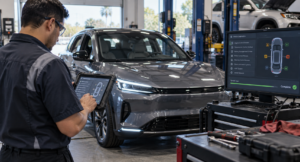
Professional service becomes more important when unusual symptoms continue or become more severe. A technician can use appropriate diagnostic equipment to evaluate battery-related systems and determine whether further testing or maintenance is necessary.
At Guarantee Automotive, professional automotive diagnostics can help identify issues affecting vehicle performance, charging systems, cooling systems, and other components.
Other Ways to Improve Summer EV Efficiency
Battery temperature is only one factor affecting EV range. Tire pressure, driving speed, acceleration, vehicle load, and climate-control use can also influence energy consumption.
Keeping tires properly inflated according to the vehicle manufacturer’s specifications can help reduce rolling resistance. Smooth acceleration and moderate speeds can also help conserve energy during summer driving.
Routine maintenance is equally important. Although EVs have fewer traditional mechanical components than gasoline-powered vehicles, they still require attention to tires, brakes, suspension components, cooling systems, cabin filters, electrical systems, and other equipment.
Final Thoughts
Extreme summer heat can affect electric vehicle battery performance, charging behavior, and driving range. While modern EVs are designed with sophisticated thermal management systems, drivers can still take practical steps to reduce unnecessary heat exposure.
Parking in shaded or covered areas, pre-conditioning the cabin while plugged in, following the manufacturer’s charging recommendations, and using available battery-care settings can all help support efficient EV operation during hot weather.
Most importantly, do not ignore persistent battery warnings or unusual charging and performance problems. Professional diagnostics can help determine whether a problem is simply weather-related or requires further attention.
For professional automotive diagnostics and EV maintenance, visit Guarantee Automotive to learn more about available vehicle services.
Helpful EV Resources
For additional information about electric vehicle technology and battery care, explore these authoritative resources: