Cars are becoming more like computers every year. Modern vehicles can connect to the internet, communicate with mobile applications, monitor hundreds of sensors, and receive software updates without visiting a dealership or repair facility.
This shift is creating a new type of vehicle known as a software-defined vehicle. Instead of relying almost entirely on physical components and fixed electronic control units, these vehicles use increasingly centralized computing systems and software to control and improve many functions.
The change is especially important for drivers because vehicle maintenance is no longer limited to oil changes, brake inspections, tire service, and mechanical repairs. Software updates, electronic diagnostics, cybersecurity, sensor calibration, and connected systems are becoming part of modern vehicle ownership.
What Is a Software-Defined Vehicle?
A software-defined vehicle, often called an SDV, is a vehicle in which software plays a much larger role in controlling, managing, and improving vehicle functions.
Traditional vehicles typically use numerous electronic control units, or ECUs, with individual computers managing specific systems. Newer architectures increasingly consolidate computing functions into more powerful centralized or zonal systems.
According to the International Energy Agency, the automotive industry is moving toward more centralized electrical and electronic architectures that allow a greater share of vehicle functionality to be controlled through software.
This technology is not limited to electric vehicles. Although EV manufacturers have been among the leaders in software-defined vehicle development, traditional gasoline-powered and hybrid vehicles are also becoming increasingly connected and software-dependent.
What Are Over-the-Air Vehicle Updates?
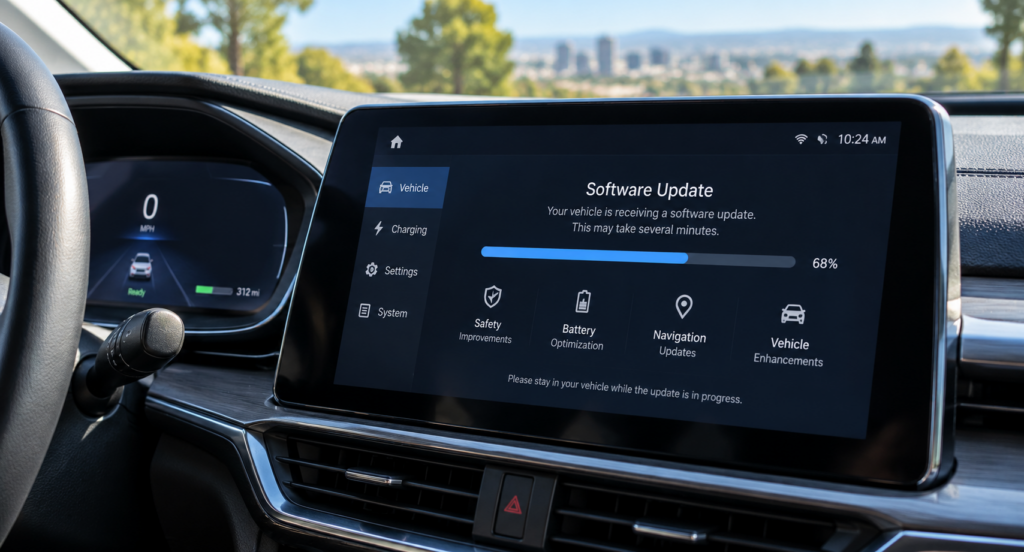
Over-the-air, or OTA, updates allow manufacturers to send software and firmware updates to a vehicle remotely. The concept is similar to updating a smartphone, tablet, or computer over an internet connection.
Depending on the vehicle, an OTA update may improve vehicle functionality, correct software problems, enhance efficiency, update navigation information, modify driver-assistance features, or address certain software-related safety concerns.
The Consumer Reports guide to OTA vehicle updates explains that newer vehicles can use these updates to fix problems, improve performance, add features, and in some situations address recall-related software issues.
Why OTA Updates Matter for Vehicle Maintenance
OTA technology is changing the traditional idea of vehicle maintenance. In the past, a software-related problem might have required a service appointment simply because a technician needed physical access to the vehicle.
With OTA technology, some software problems can potentially be addressed remotely. This can save time and may reduce the number of visits required for certain software-related issues.
The IEA notes that OTA capabilities can allow manufacturers to fix software defects, improve vehicle performance, deploy cybersecurity updates, and introduce new features after a vehicle has been sold.
However, OTA updates do not eliminate the need for professional automotive service. Physical components still wear out, sensors can become damaged or misaligned, batteries require care, and mechanical systems still need inspection and repair.
OTA Updates Do Not Replace Regular Maintenance
One of the biggest misconceptions about software-defined vehicles is that software can eliminate traditional maintenance. It cannot.
An OTA update may improve the software controlling a braking system, but it cannot replace worn brake pads. A software update may improve battery management, but it does not automatically repair a damaged cooling system. A navigation update does not correct an alignment problem.
Modern vehicles still depend on physical components that require inspection and service.
Guarantee Automotive provides services including system diagnosis and repair, brake service, tire and wheel balancing, air conditioning service, shocks and strut replacement, and routine maintenance.
How Software Can Affect Your Vehicle’s Performance
Software can influence many aspects of the driving experience. Depending on the vehicle, electronic systems may control or assist with powertrain management, battery management, climate control, driver assistance, infotainment, charging, communications, and other functions.
That means a software update can sometimes change how a vehicle behaves without any physical parts being replaced.
For example, an automaker may release an update designed to improve energy management or modify how a vehicle’s battery management system operates. Another update might improve how an advanced driver assistance feature responds to certain road conditions.
The SAE International automotive engineering community is also actively studying software-defined vehicle architectures, OTA updates, centralized computing, and related technologies.
When You Should Install an OTA Update
If your vehicle notifies you that a software update is available, do not automatically ignore it. Updates may contain bug fixes, performance improvements, new features, or security-related changes.
Before installing an update, read the manufacturer’s instructions. Some updates may require the vehicle to be parked for a certain period, connected to a charger, or within a particular battery-charge range.
You should also make sure that the vehicle has a reliable connection when required and that you understand whether the update will temporarily disable certain functions.
Never interrupt an update unless the vehicle manufacturer specifically instructs you to do so.
Software Updates and Vehicle Cybersecurity
Connectivity provides convenience, but it also creates new cybersecurity considerations. Modern vehicles may communicate through cellular networks, Wi-Fi, Bluetooth, mobile applications, and other connected systems.
The National Highway Traffic Safety Administration describes automotive cybersecurity as protecting vehicle electronic systems, communication networks, software, data, and control systems against unauthorized access, manipulation, damage, and malicious attacks.
This makes software updates important for more than convenience. Security-related updates may help manufacturers address vulnerabilities as they are discovered.
Drivers should also protect their connected vehicle accounts by using strong passwords and avoiding sharing account credentials. If your vehicle manufacturer sends an important security or recall notice, review it rather than dismissing it as another routine notification.
How Software-Defined Vehicles Affect Diagnostics
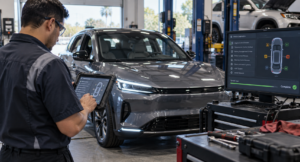
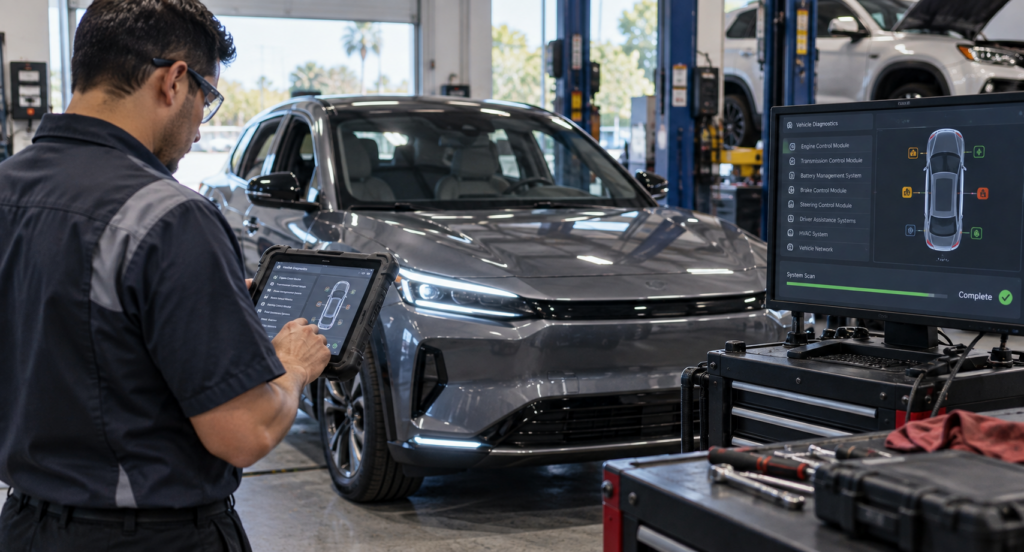
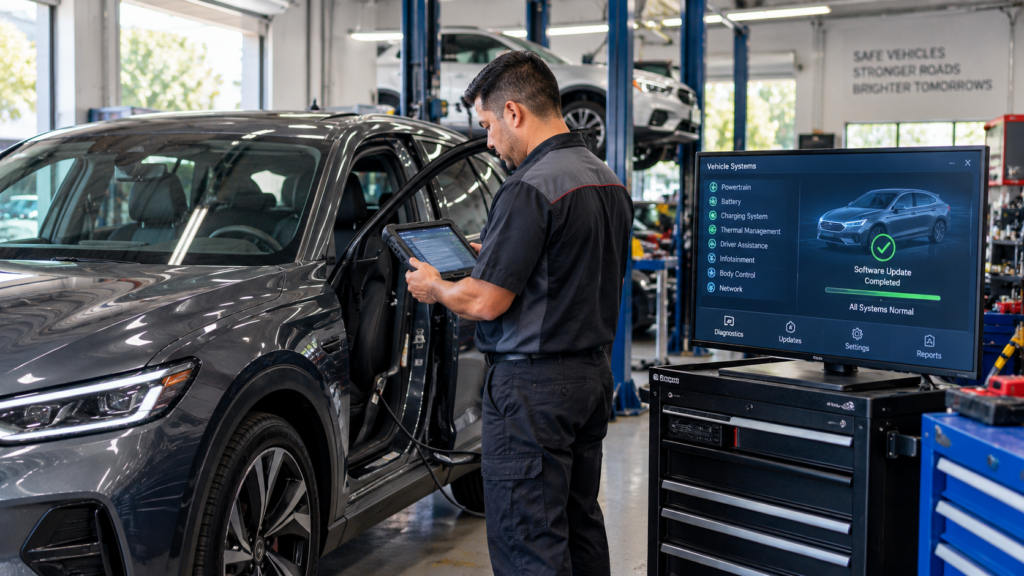
Vehicle diagnostics are becoming increasingly sophisticated. A modern technician may need to examine electronic control modules, communication networks, sensor data, software versions, fault codes, and live vehicle information in addition to traditional mechanical components.
This means diagnostic equipment has become an increasingly important part of professional automotive service.
A warning light may be caused by a mechanical problem, an electrical issue, a sensor problem, a communication fault, or software-related behavior. Proper diagnosis helps identify the actual cause rather than replacing parts unnecessarily.
What Happens When Software and Hardware Interact?
One reason modern vehicle diagnosis can be complicated is that software and hardware are closely connected.
A vehicle may have a physical radar sensor, camera, battery module, steering component, or electronic control unit that depends on software to interpret information and control the system.
If a sensor is replaced, the vehicle may require programming, configuration, or calibration. If an electronic control module is replaced, it may need to communicate correctly with other modules before the vehicle operates normally.
This is one reason professional diagnostics are becoming more important as vehicles become more technologically advanced.
Why Drivers Still Need Professional Inspections
Software can solve some problems remotely, but it cannot diagnose every physical issue automatically.
A professional inspection can identify problems such as damaged wiring, worn suspension components, brake wear, tire problems, cooling-system issues, sensor damage, or other physical conditions that software alone cannot repair.
In some situations, an electronic warning may be the first indication of a physical problem. Ignoring the warning because the vehicle still drives normally could allow the underlying issue to become more serious.
Guarantee Automotive’s system diagnosis and repair services can help identify vehicle problems using modern diagnostic technology.
Software Can Extend the Useful Life of a Vehicle
One potential advantage of software-defined vehicles is that the vehicle can continue receiving improvements after it leaves the factory.
The IEA’s Global EV Outlook 2026 highlights the growing importance of centralized software systems and remote updates in modern vehicles.
Unlike a traditional vehicle feature that remains unchanged after purchase, software-controlled functions can potentially be improved through future updates.
For owners who plan to keep their vehicles for many years, continued software support could become an increasingly important consideration when evaluating long-term vehicle ownership.
What Drivers Should Watch for in 2026
As vehicle technology continues to develop, drivers should become familiar with several areas of modern vehicle care:
- Regular software and firmware updates
- Vehicle cybersecurity notifications
- Electronic diagnostic warnings
- ADAS sensor and camera calibration
- Battery and charging-system diagnostics on EVs
- Traditional mechanical maintenance
- Manufacturer recall and service communications
Keeping track of both digital and physical maintenance can help drivers avoid treating a modern vehicle like either a traditional car or a smartphone. Today’s vehicles require attention to both sides.
How Software-Defined Vehicles Are Changing Auto Repair
The repair industry is adapting alongside vehicle technology. Technicians increasingly need knowledge of electronics, diagnostics, software systems, sensors, communications, and traditional mechanical repairs.
This does not mean the traditional mechanic is disappearing. Instead, modern automotive technicians are becoming more technically specialized as vehicles combine mechanical engineering with increasingly sophisticated computing systems.
For vehicle owners, the result is simple: choosing a repair facility with modern diagnostic capabilities can become increasingly important as the technology inside vehicles evolves.
Final Thoughts
Software-defined vehicles are changing what it means to own and maintain a car. OTA updates can deliver software improvements, security patches, performance changes, and new capabilities without requiring a traditional service visit for every update.
At the same time, software does not eliminate the need for professional automotive maintenance. Tires, brakes, suspension components, cooling systems, batteries, sensors, and other physical components still require inspection and service.
The best approach is to treat software maintenance and mechanical maintenance as two parts of the same vehicle-care strategy. Keep your vehicle’s software updated, pay attention to manufacturer communications, and have warning signs properly diagnosed rather than ignoring them.
As vehicles become increasingly connected and software-driven, professional diagnostics will play an even larger role in keeping them reliable, efficient, and safe.
For additional automotive maintenance information, visit the Guarantee Automotive Blog and explore the site’s Car Maintenance and Auto Repair Tips resources.