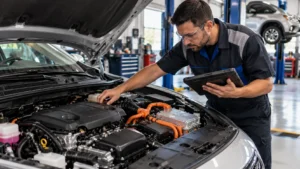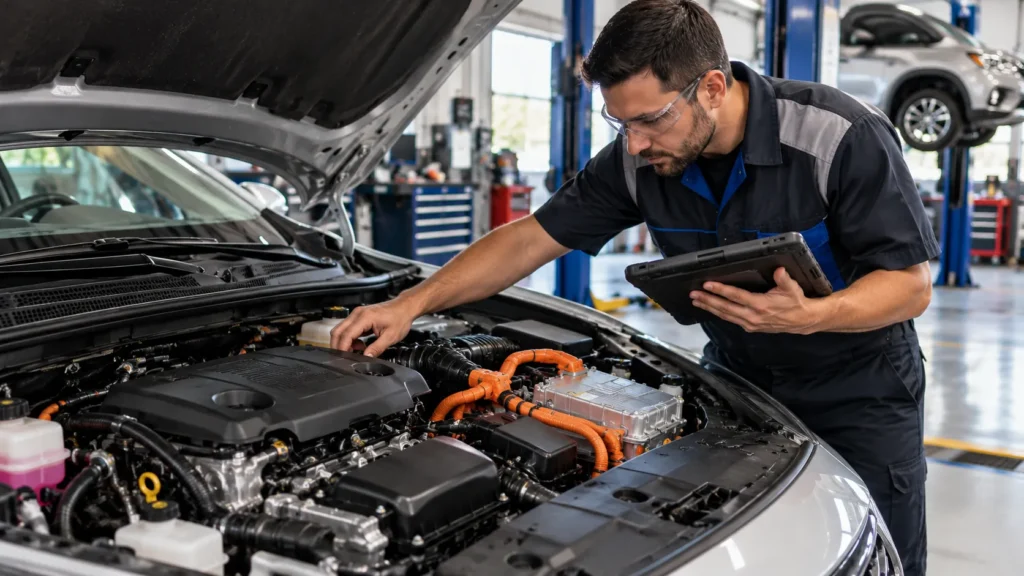
Hybrid cars are having a major moment in 2026. Drivers like their fuel-saving potential without giving up the flexibility of a gasoline engine. But owning a hybrid also raises an important question: what maintenance does a hybrid car actually need? The answer is a combination of familiar engine care and attention to electrical, braking, and cooling systems.
The trend is real. The U.S. Energy Information Administration reported that conventional hybrids reached 16% of new U.S. light-duty vehicle sales in the third quarter of 2026. In California, hybrids accounted for 22.8% of new vehicle registrations through September, according to the California New Car Dealers Association.
As more hybrids hit the road, understanding hybrid car maintenance can help owners avoid preventable breakdowns, recognize warning signs, and protect their vehicles for the long term. Here are nine checks worth keeping on your schedule.
Why Hybrid Maintenance Is Different
A conventional hybrid electric vehicle (HEV) combines a gasoline engine with one or more electric motors. It normally charges its traction battery through the engine and regenerative braking rather than through a wall plug. A plug-in hybrid (PHEV) has a larger battery that can also be charged externally. The U.S. Department of Energy’s hybrid technology guide explains how these components work together.
Because hybrids still have engines, they need many of the same services as gasoline-only cars. Their electric components usually require less routine service, but they must be diagnosed correctly when faults occur. Your vehicle’s owner’s manual—not a generic mileage chart—should determine the exact schedule.
1. Follow the Engine Oil and Filter Schedule
A hybrid engine may shut off at traffic lights or run less often during low-speed travel, but that does not make oil changes optional. Engine oil still ages, collects contaminants, and protects moving parts whenever the gasoline engine operates.
Follow the manufacturer’s oil specification and the mileage or time interval, whichever applies. Frequent short trips and demanding operating conditions may change the recommended schedule. For broader long-term care advice, read Guarantee Automotive’s high-mileage vehicle maintenance guide.
2. Inspect the Battery Cooling and Thermal Systems
Hybrid vehicles manage heat from the engine, traction battery, inverter, and other electronics. Depending on the model, these components may use separate coolant circuits, air ducts, fans, or a combination of systems. A blocked battery-air intake or a cooling-system fault can affect performance.
Keep accessible cabin and luggage-area ventilation openings clear, and have coolant levels, hoses, leaks, and warning messages checked according to the owner’s manual. Never assume the engine and inverter use identical coolant or service procedures.
Important: orange high-voltage cables, battery packs, and related electrical components are not DIY inspection points. The National Highway Traffic Safety Administration’s hybrid safety guidance explains why these systems require special precautions.
3. Test the 12-Volt Auxiliary Battery
Many hybrid owners focus on the large traction battery and forget about the smaller low-voltage battery. Yet a weak auxiliary battery can prevent the vehicle from entering its ready-to-drive mode or cause unpredictable electrical warnings. Its location and chemistry vary by model.
Ask for a battery condition test when you notice slow system startup, repeated low-voltage alerts, or unusual electronic behavior. The shop should use the correct testing method for your particular battery. Guarantee Automotive’s article on signs a car battery needs replacement covers other useful warning signs.
4. Check the Brakes Despite Regenerative Braking
Regenerative braking captures some energy while slowing the vehicle, so the friction brakes may experience less wear. The Department of Energy’s maintenance comparison notes that hybrid brake systems generally last longer than those in conventional vehicles.
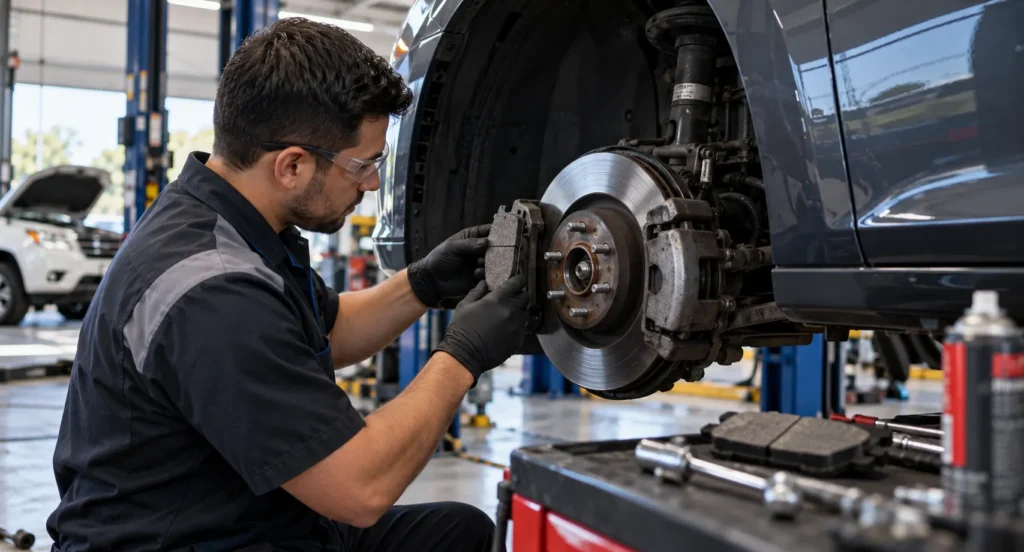
Longer pad life does not mean maintenance-free brakes. Rotors can corrode, calipers can stick, and brake fluid can deteriorate. Have a technician inspect pads, rotors, calipers, lines, and fluid according to the service schedule, especially if you hear grinding, feel vibration, or experience uneven braking. For more context, see why your car’s brakes deserve more attention.
5. Watch Tire Pressure, Rotation, and Alignment
Tires influence ride comfort, traction, stopping distance, and fuel economy. Check cold tire pressure using the value on the driver’s doorjamb label, not the maximum printed on the tire sidewall. Examine tread depth and look for uneven wear.
The NHTSA TireWise resource provides tire maintenance guidance for everyday drivers. Follow the manufacturer’s tire rotation pattern and schedule; if the car pulls or wears tires unevenly, have alignment and suspension components evaluated. Explore Guarantee Automotive’s guide on how tire rotation can save money and its article about wheel alignment warning signs.
6. Replace Air Filters and Check Air Conditioning
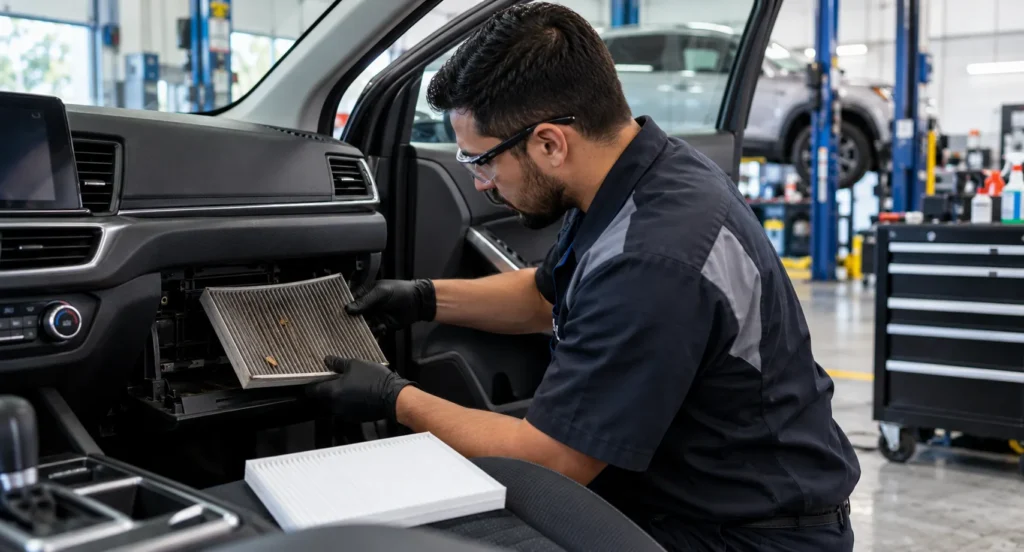
Hybrid engines still need clean intake air, and drivers still need effective cabin filtration. A dirty engine air filter may restrict airflow; a clogged cabin filter can reduce ventilation and make the cabin uncomfortable. Inspect both at the intervals recommended for your vehicle and driving environment.
Some hybrids use electrically driven air-conditioning compressors with model-specific lubricants and service requirements. That makes professional servicing important when the system loses cooling performance. Learn more from Guarantee Automotive’s article about cabin air filters and HVAC care.
7. Investigate Hybrid-System Warning Lights
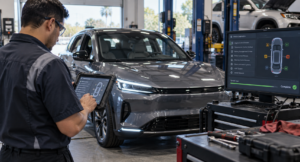
A hybrid can display warnings related to the engine, traction battery, inverter, charging circuitry, brake controls, or communication between electronic modules. A dashboard alert is a symptom, not a diagnosis; replacing parts without testing can become expensive.
If a hybrid-system warning appears, follow the owner’s manual. Stop driving when a red warning, overheating notice, severe power loss, or unsafe braking behavior indicates an urgent problem. Qualified diagnostic equipment can read manufacturer-specific codes and live data to help locate the cause.
8. Review Transmission and Fluid Requirements
Hybrid drivetrains differ substantially. Some use electronically controlled transaxles; others use conventional automatic, dual-clutch, or other transmission designs. Their fluid types, inspection methods, and service intervals are not interchangeable.
Check the maintenance guide for transmission fluid, engine coolant, brake fluid, and any separate hybrid-system coolant. Avoid assuming that a fluid is either universal or guaranteed to last forever. If you notice fluid leaks, jerking, abnormal noises, or a sudden change in how the car shifts or delivers power, arrange an inspection.
9. Check Software Updates and Safety Recalls
Modern hybrids use software to coordinate the gasoline engine, electric motor, battery management, braking, and sometimes advanced driver-assistance features. Manufacturers may issue updates or technical service information to address specific conditions.
Use the NHTSA recall lookup to check your vehicle identification number for unrepaired safety recalls. For connected-vehicle technology, Guarantee Automotive’s article about software-defined vehicles and over-the-air updates offers additional background.
How Often Should You Service a Hybrid?
There is no single service interval that fits every hybrid. Requirements vary with the model, engine, battery chemistry, age, mileage, climate, and driving conditions. A useful approach is to follow the factory maintenance schedule, inspect tires regularly, address warning lights promptly, and keep a record of completed work.
If you are buying a used hybrid, ask for service history and a model-appropriate inspection. A diagnostic report can help assess current faults, but it should not be treated as a guarantee of future battery life.
Keep Your Hybrid Reliable for the Long Run
Hybrid cars can be efficient, practical daily drivers, but they still need thoughtful maintenance. Engine oil, cooling systems, low-voltage batteries, friction brakes, tires, filters, drivetrain fluids, and diagnostic software all deserve attention. The key is following the right schedule for your vehicle rather than assuming a hybrid needs either no maintenance or exactly the same care as every gasoline car.
For routine maintenance, brake inspections, tire care, and vehicle diagnostics, explore Guarantee Automotive and its automotive maintenance articles. Before booking specialized high-voltage work, confirm that the shop has the training and equipment required for your hybrid model.